
Meal train guide
Meal train for cancer patients: what to bring and when
A meal train for someone with cancer works best when it follows the treatment schedule. Plan meals around treatment dates, bring small portions of mild food in disposable containers, follow food safety guidance when blood counts are low, and pace it to last for months instead of weeks.
Free, no ads. Takes under 1 minute.
By Kevin Holst · Updated 22 Sept 2026
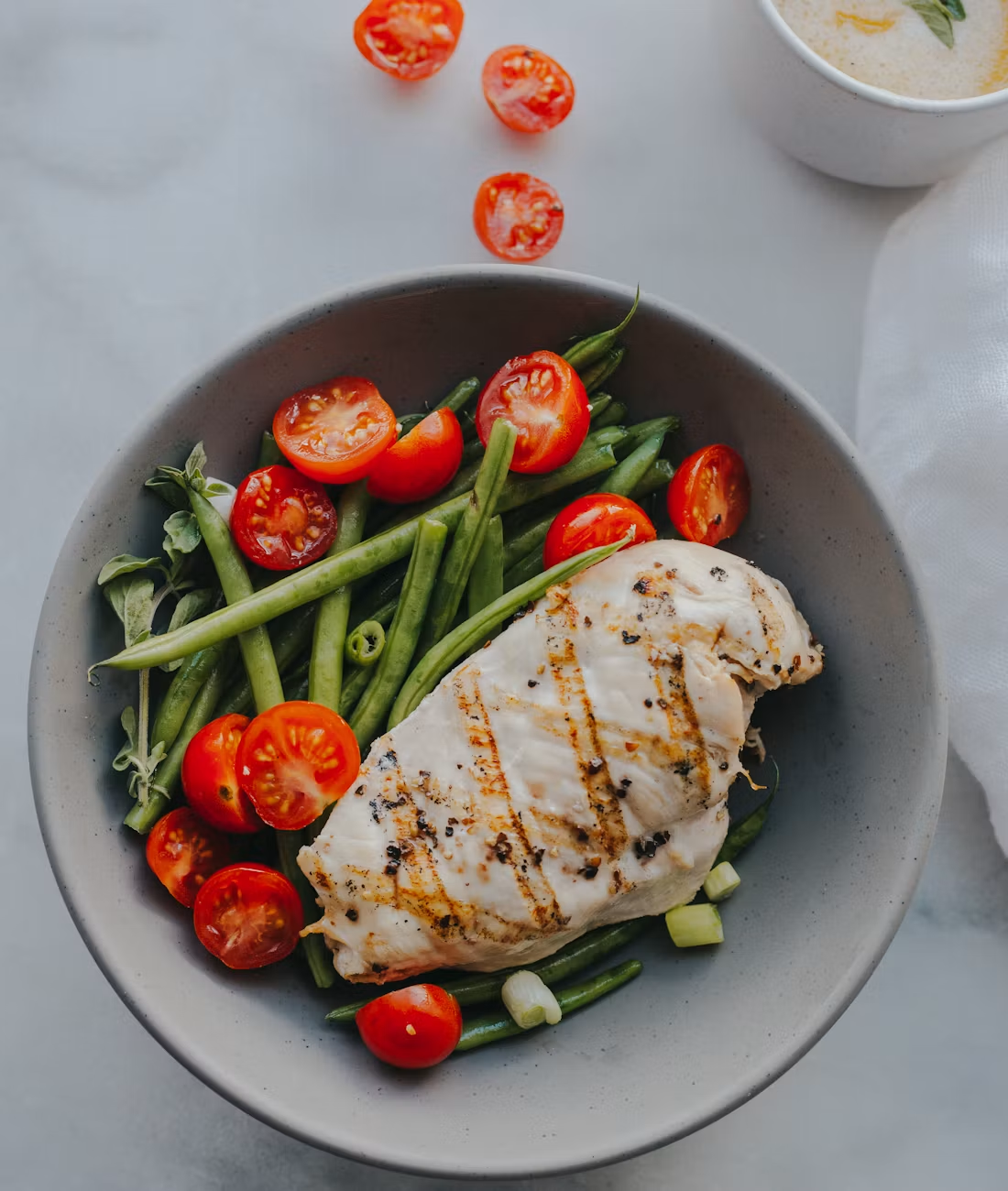
Before you cook
Ask for the treatment dates, any allergies, and what sounds good right now.
Day one
Start a meal train on Rallee with meals, gift cards and rides on one page.
After each treatment
Small, mild meals left at the door. Drop it off, but don't plan on staying.
The good days
Their favorites, plus a stocked freezer for the next round.
Months three to six
Keep it going after the first rush of help fades.
At a glance
What to know before you plan the first meal
- How long to plan the meal train for
- Months
Timing
When to bring meals during a chemo cycle
A chemo cycle is a period of treatment followed by a period of rest.1 Needs rise and fall with it, so make sure to note where the recipient is at in the cycle before delivering a meal.
Step 1
Treatment day
A long day at the infusion center.
BringAn easy dinner for the family, and a ride there and back.
SkipMeals that require significant prep for the family.
Step 2
The next few days
Nausea and tiredness often peak.34
BringDoorDash gift cards or light, basic foods.
SkipStrong smells, and greasy or spicy food.
Step 3
Days 7 to 10
Blood counts are lowest and infection risk is highest, so food safety becomes extremely important.5
BringFully cooked food, chilled, dated and left at the door.
SkipRaw or deli food, and visiting if you've been sick.
Step 4
Before the next round
Often the best stretch. Appetite can come back.
BringTheir favorites, plus freezer meals for next round.
SkipNothing. Ask what sounds good.
Every cycle is different, so pay attention and ask the family before planning your support.
What to cook
Meal train ideas for someone with cancer
Not sure what meals to bring someone with cancer? Pick a kind of food, check it against how they're feeling this week, then choose a meal. Symptom guidance is from the National Cancer Institute and the American Cancer Society.
Soups and broths
Plain comfort food
Soft, saucy dishes
Good for- Mouth sores
- Trouble swallowing
- 7
- Mac and cheese
- Shepherd's pie
- Pot roast with gravy
- A fully set egg frittata
Smoothies and shakes
Tangy, marinated dishes
Good for- Metallic taste
- Food tastes off
- 6
- Lemon herb chicken
- Teriyaki chicken and rice
- Citrus salmon, cooked through
- Chicken with a bright vinaigrette
Cold treats
Freezer-ready portions
Good for- Exhaustion
- The days before the next round
- Single servings of lasagna
- Breakfast burritos
- Mild chicken enchiladas
- Meatballs in marinara
Delivery gift cards
Good for- Any symptom
- Changing tastes
- 14
- DoorDash or Grubhub
- Grocery delivery
- Their favorite local restaurant
When blood counts are low, everything should be fully cooked. See food safety below.
“If your friend is getting treatment, ask what they feel like eating.”American Cancer Society12
Food safety
Food safety when someone's immune system is low
ACS says the low point in blood counts "usually occurs about 7 to 10 days after getting chemo."5 Check if the care team has provided any food rules or guidance. Always check if the family has any allergies or aversions.
Skip when counts are low
Pack it safely
- Refrigerate within 2 hours of cooking11
- Label what's in it, the date and how to reheat
- Disposable containers only
- Been sick this week? Send a gift card instead
The full list is in our guide on how to help a loved one with cancer.

Delivery
How to drop off a meal, and keep them coming
Help tends to pour in for two weeks and then stop. But ACS notes fatigue can last "weeks, months, or even years" after treatment.4 Plan for the long haul.
Text, don't knock
Leave it in a cooler on the porch so nobody has to get up.
Don't plan to stay
Memorial Sloan Kettering says to "give your friend permission to say no to a visit."13
Label it
What's in it, the date, and how to reheat, on the lid.
Sign up for an open day
Check the calendar for days nobody has claimed yet, especially later in treatment when help thins out.
More ways to help
What to offer besides meals
Rides, groceries, cleaning and kids help just as much. On Rallee they all sit on the same calendar. All support types are optional, you can choose as many as you'd like:
Deliver a meal
Provide transportation
Run an errand
Help clean
Help with kids
Help with pets
Give coffee/tea
Donate
Give flowers
Visit
Give a gift
Check in
Share updates
Custom support
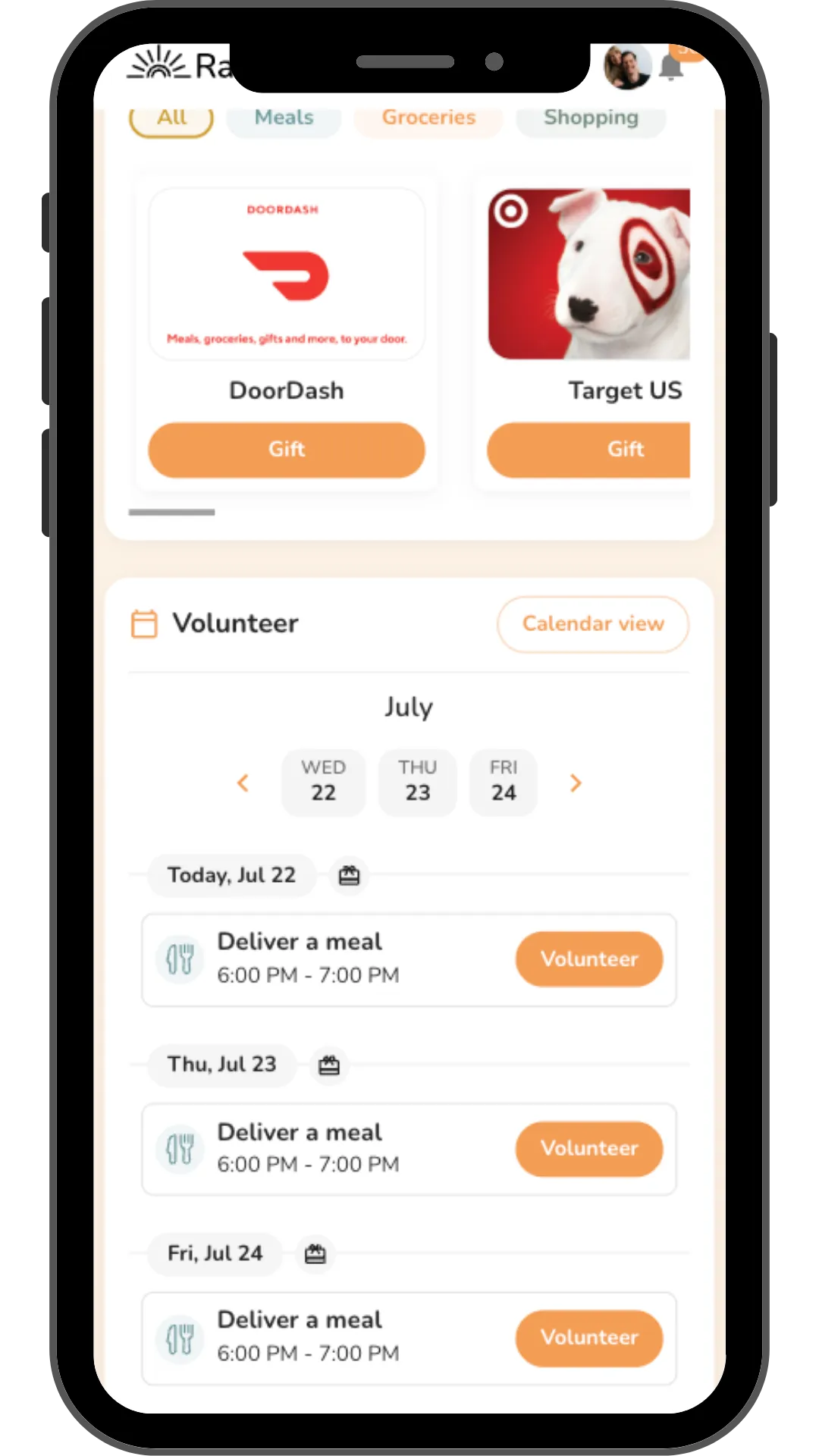 Meal calendar
Friends claim a day with one tap.
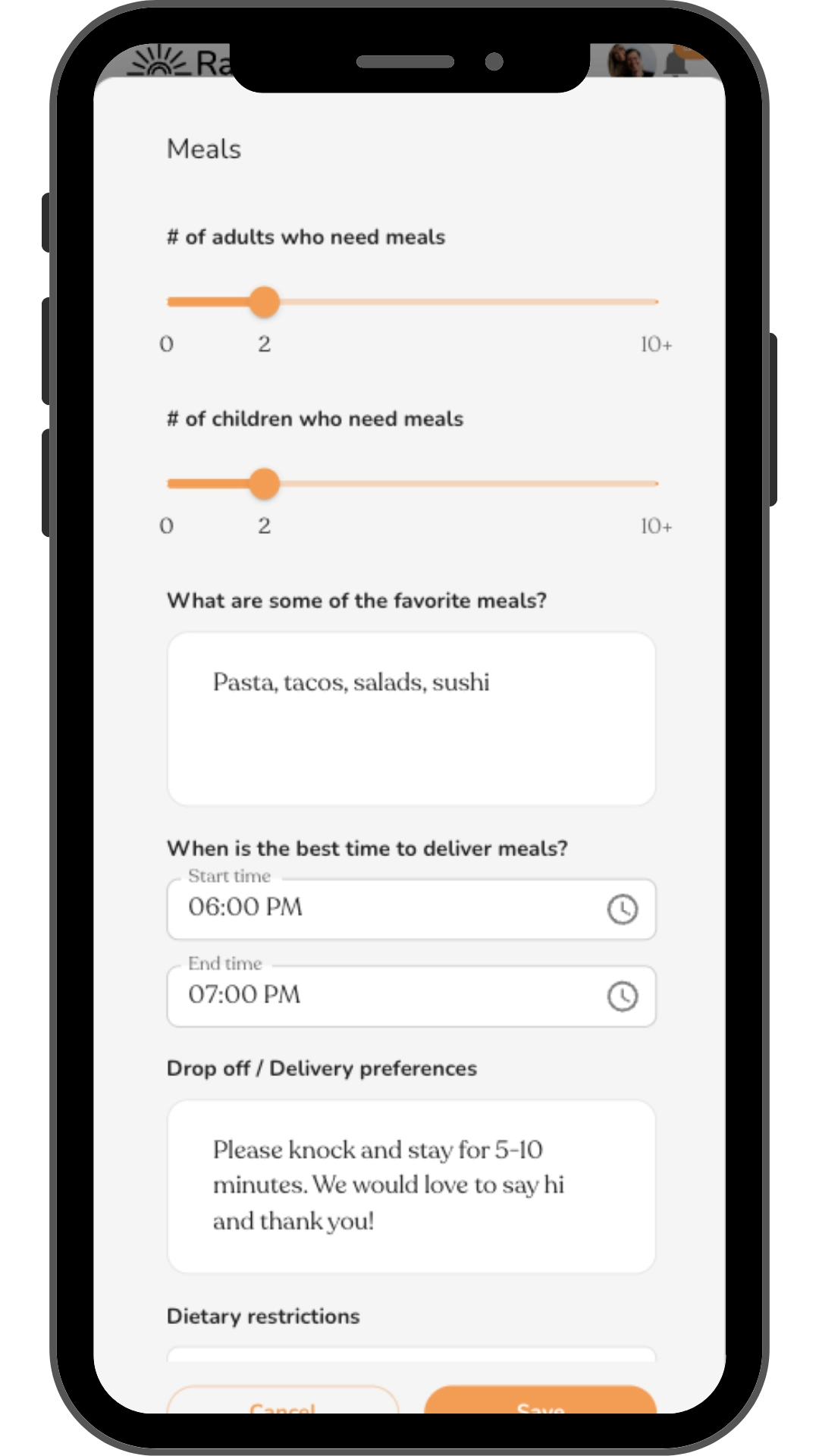 Drop-off notes
Delivery window and instructions, written once.
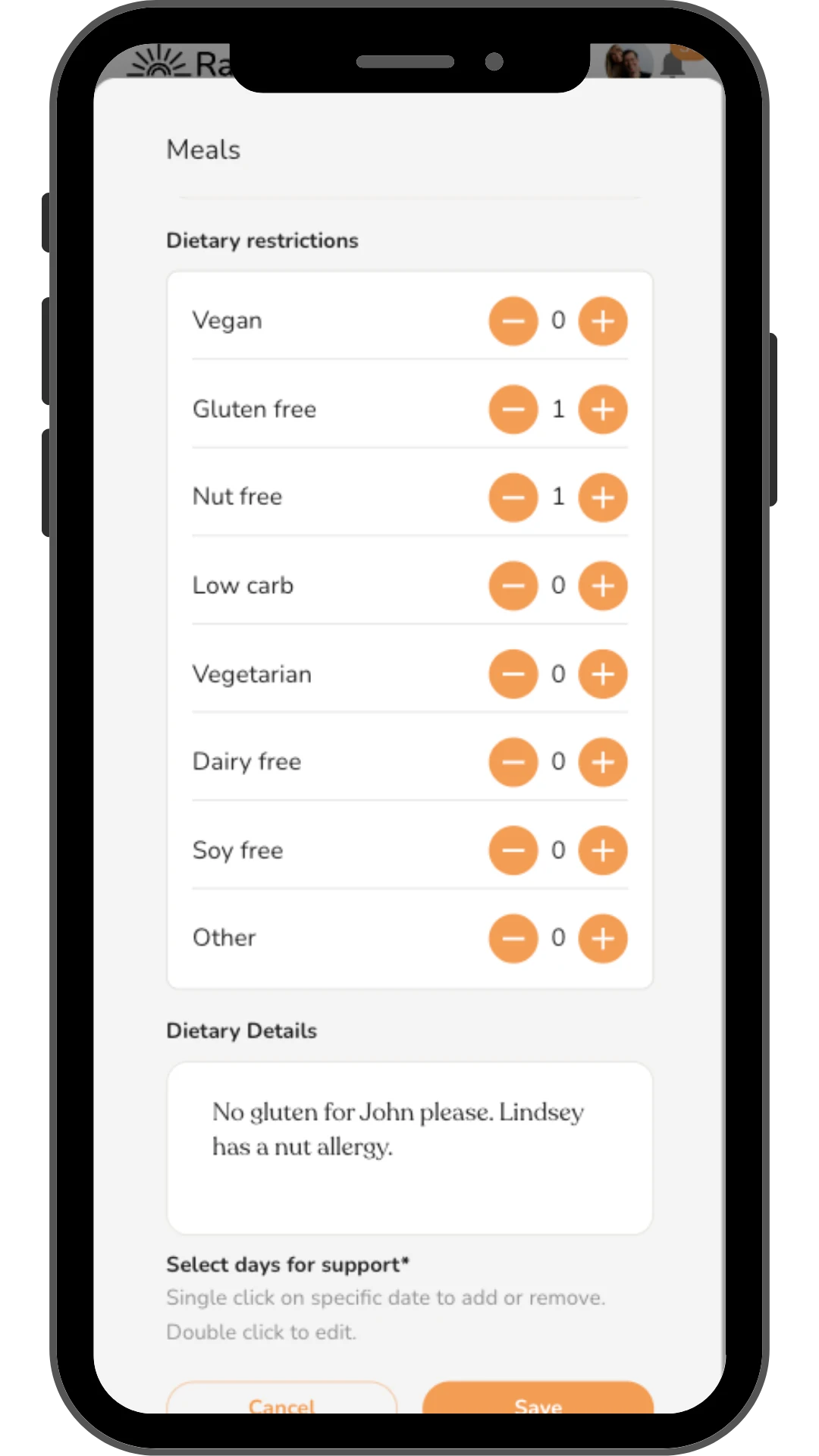 Dietary needs
Allergies every volunteer sees.
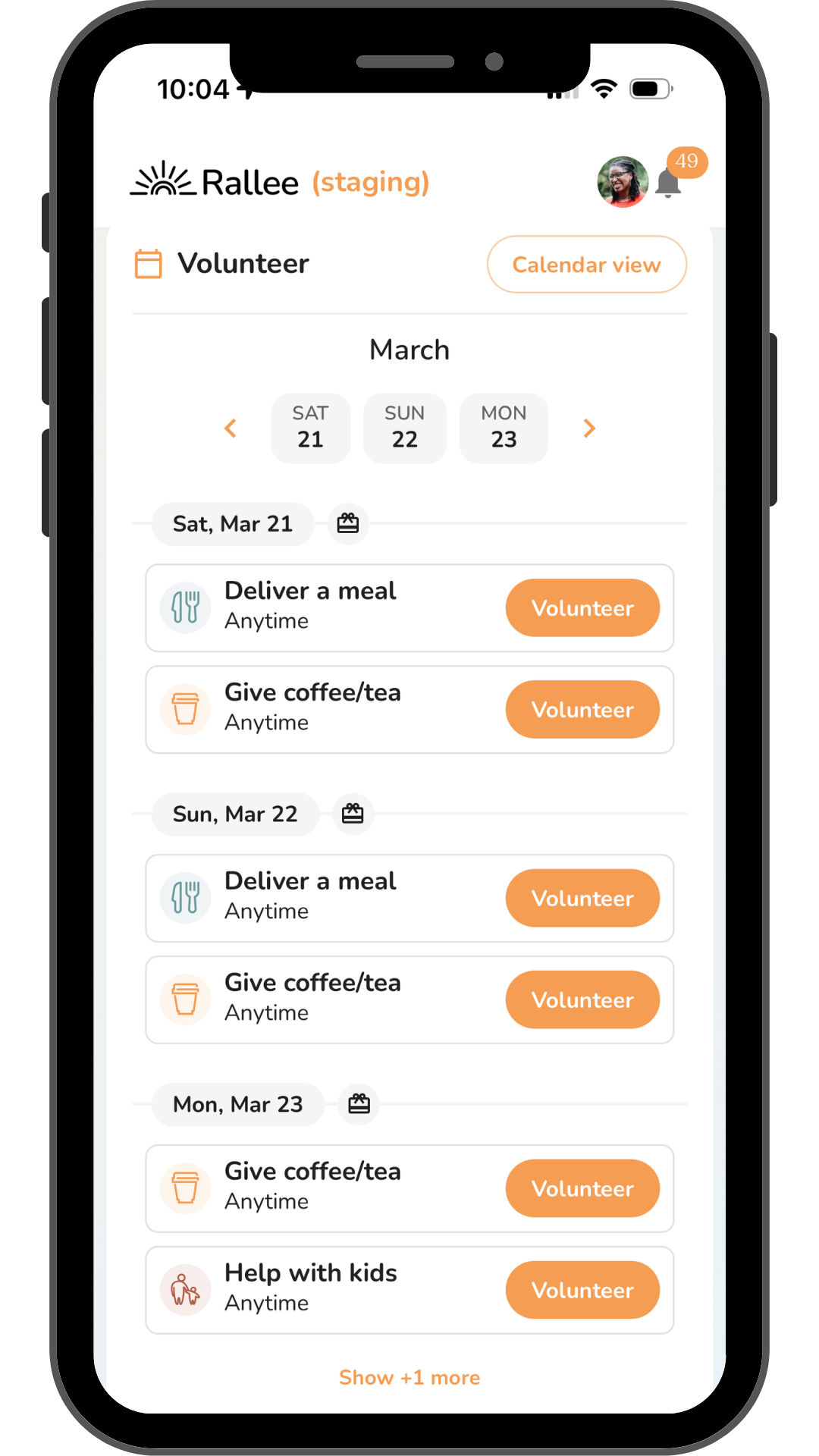 More than meals
Coffee, rides and kids on one calendar.
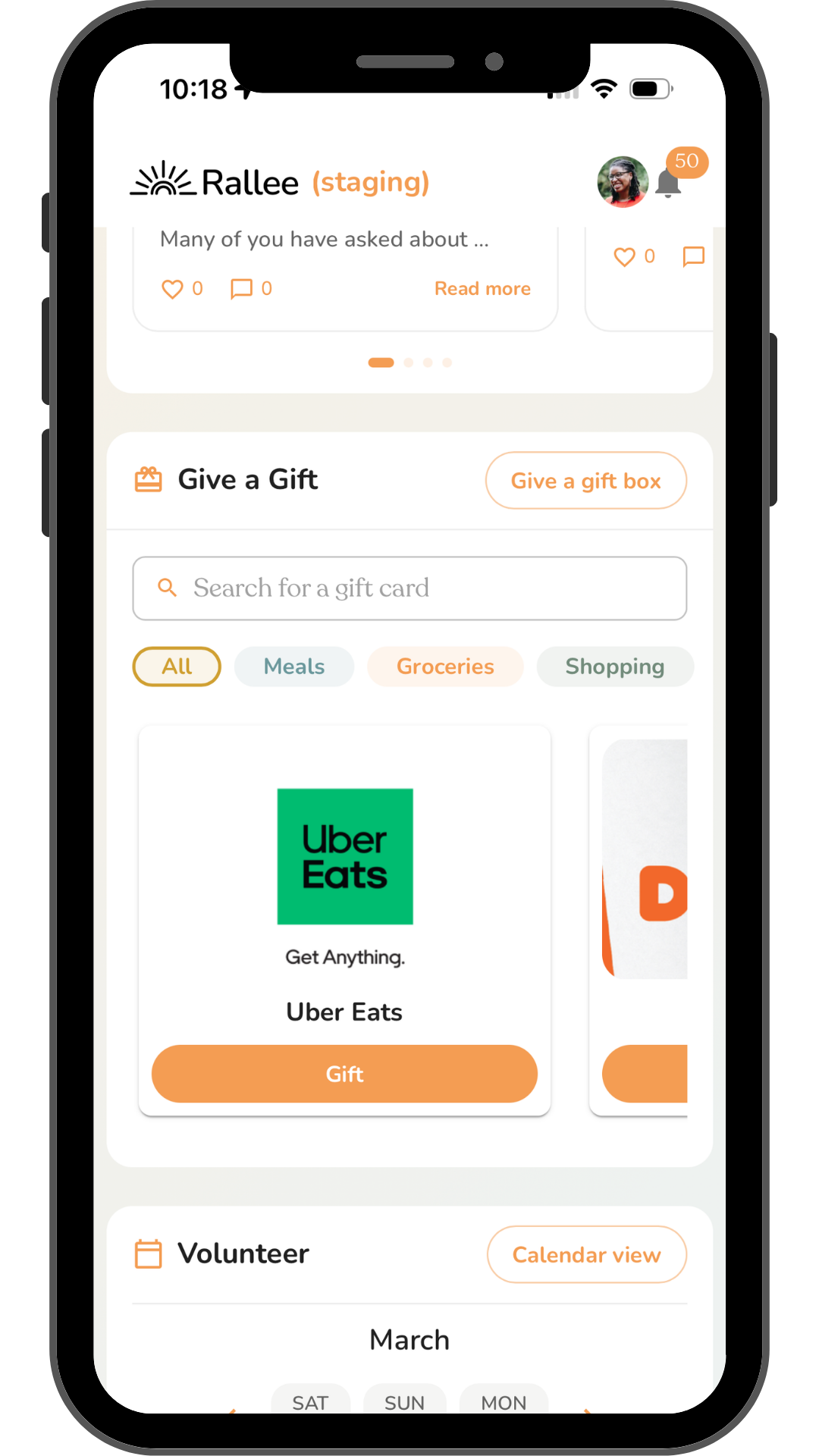 Gift cards
For friends who can't cook.
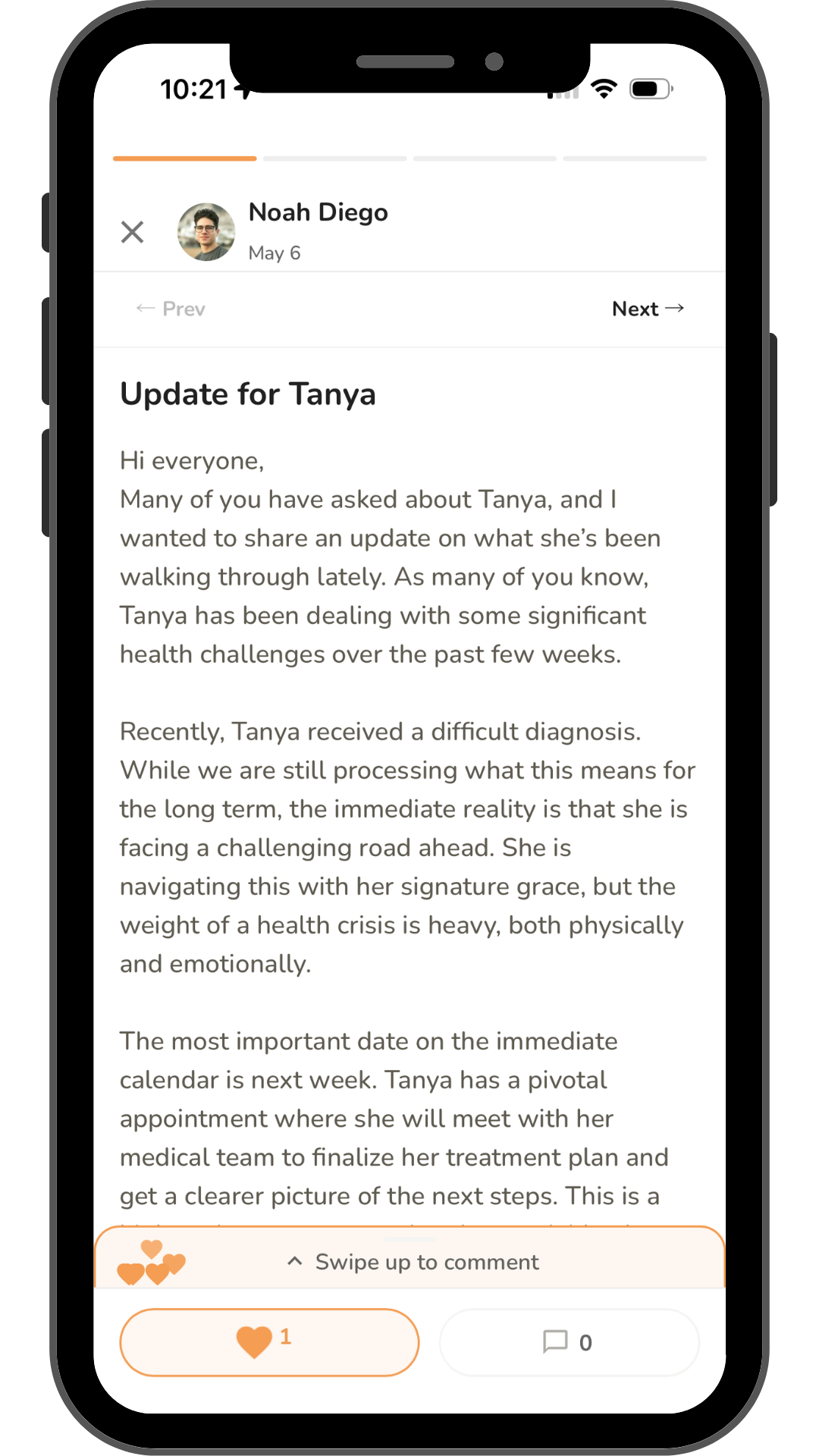 Updates
News for everyone in one place.
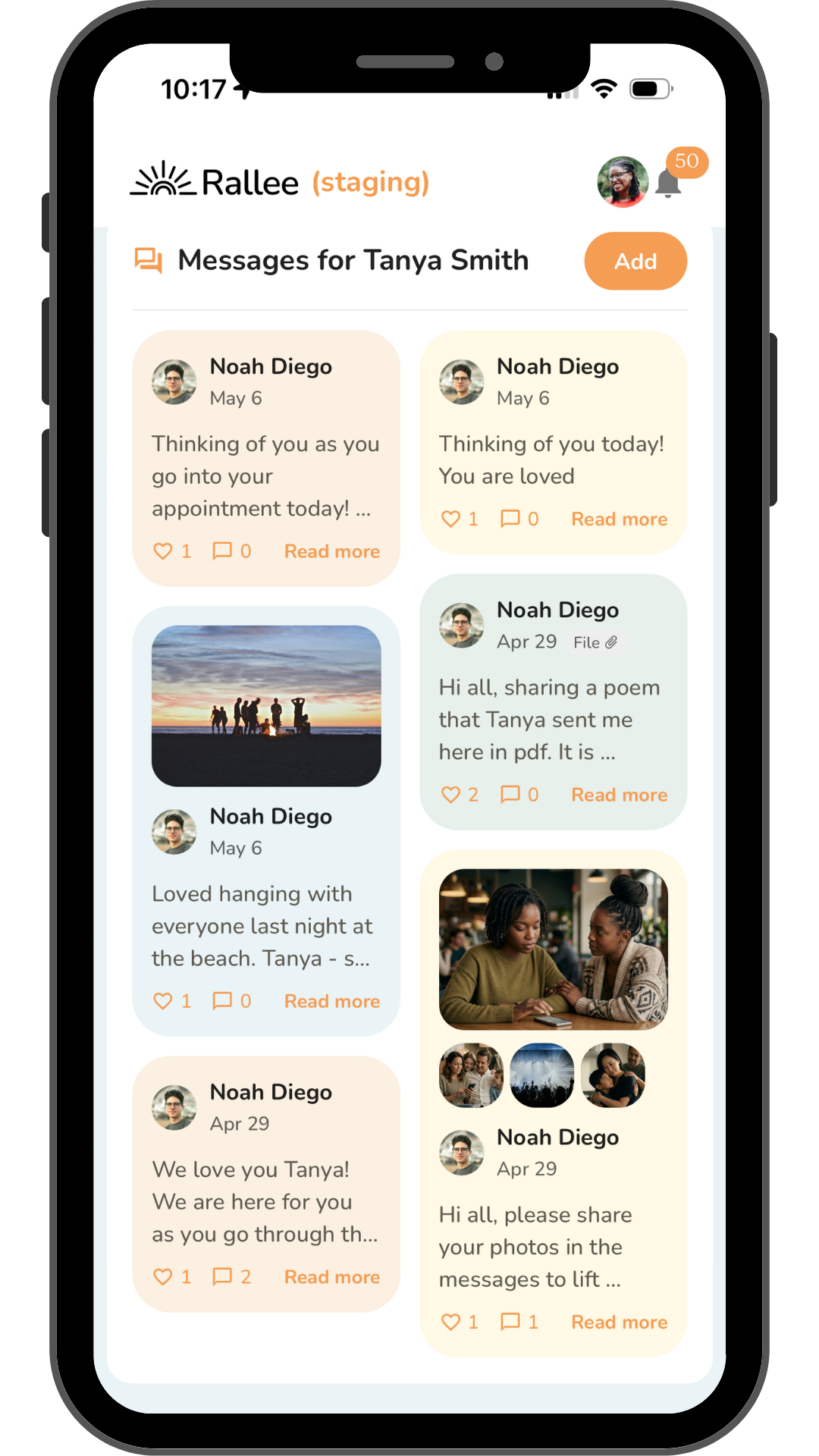 Messages
Notes of encouragement they can read anytime.
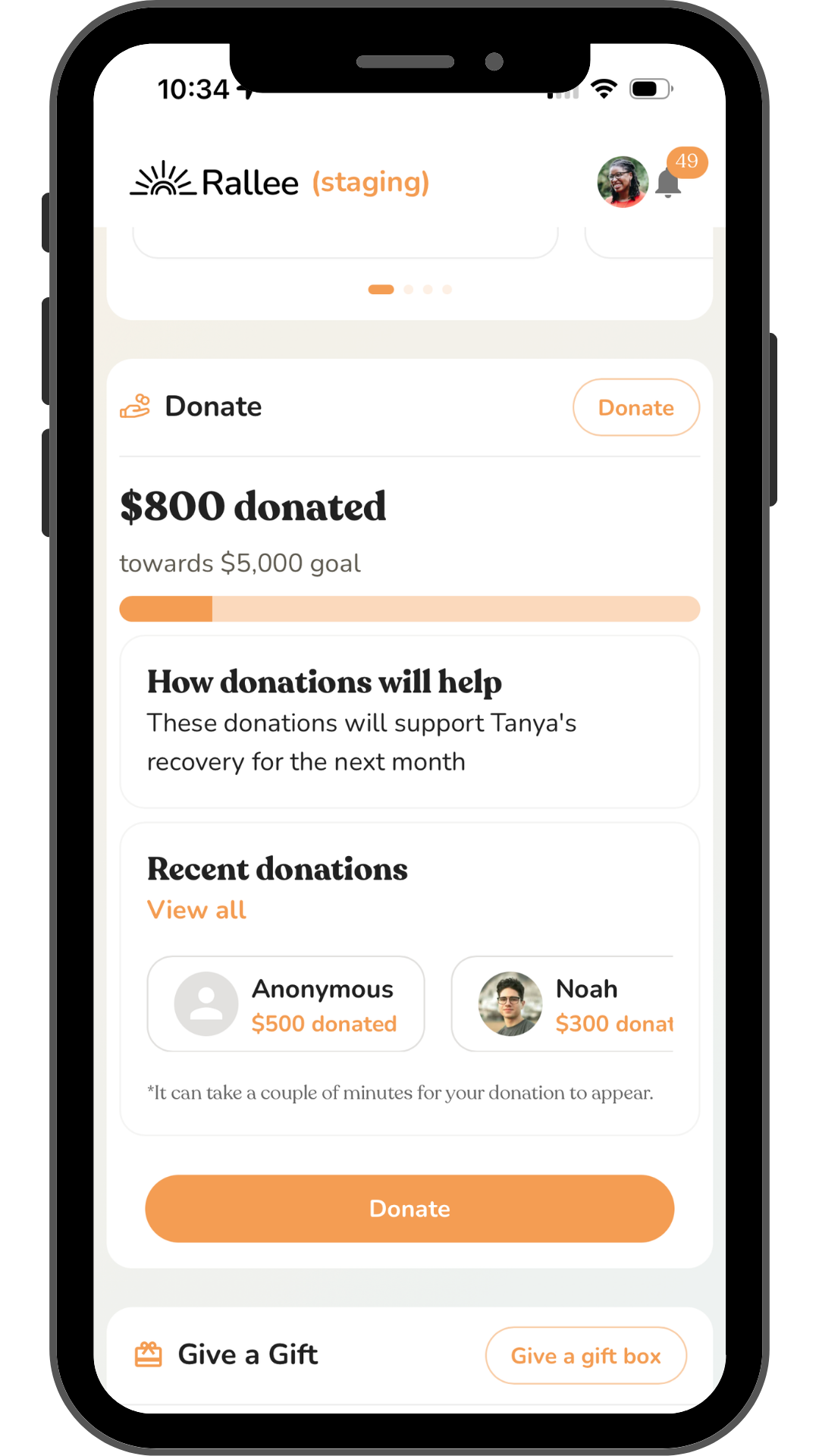 Donations
Optional, and the money goes to them.
Get started
How to start a meal train for someone with cancer
Setting up a meal train on Rallee takes under 1 minute. It's free, with no ads. Tip: set the dates to cover the whole treatment and add a note on each treatment day.
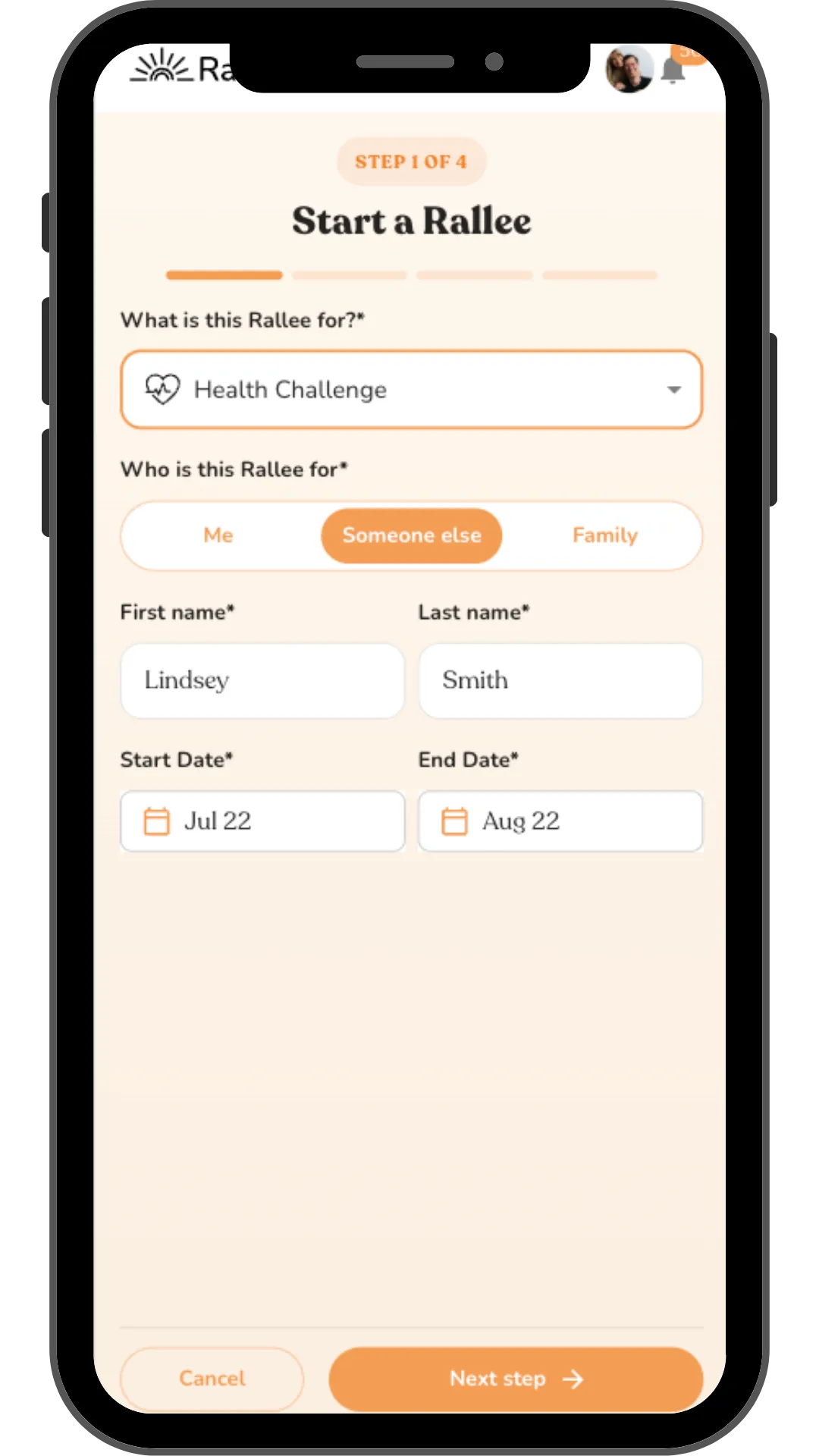 1
1Step 1
Share who the meal train is for.
Works for any occasion: babies, surgery, grief, illness
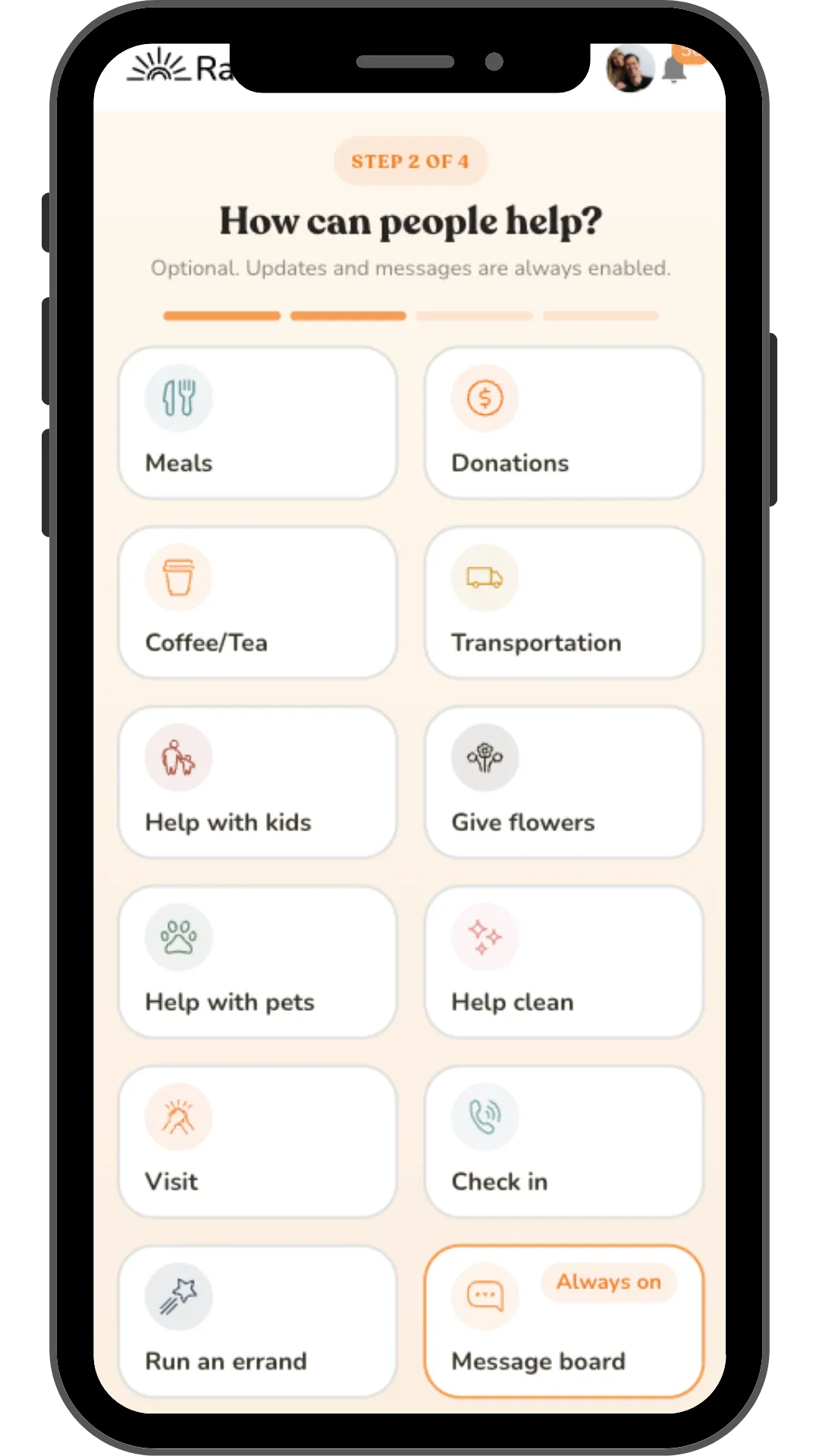 2
2Step 2
Choose how people can help, not just meals.
Meals is the core of every meal train
- 3
Step 3
Add meal details, dietary needs, and delivery days.
Favorite meals, preferred timing, drop-off notes
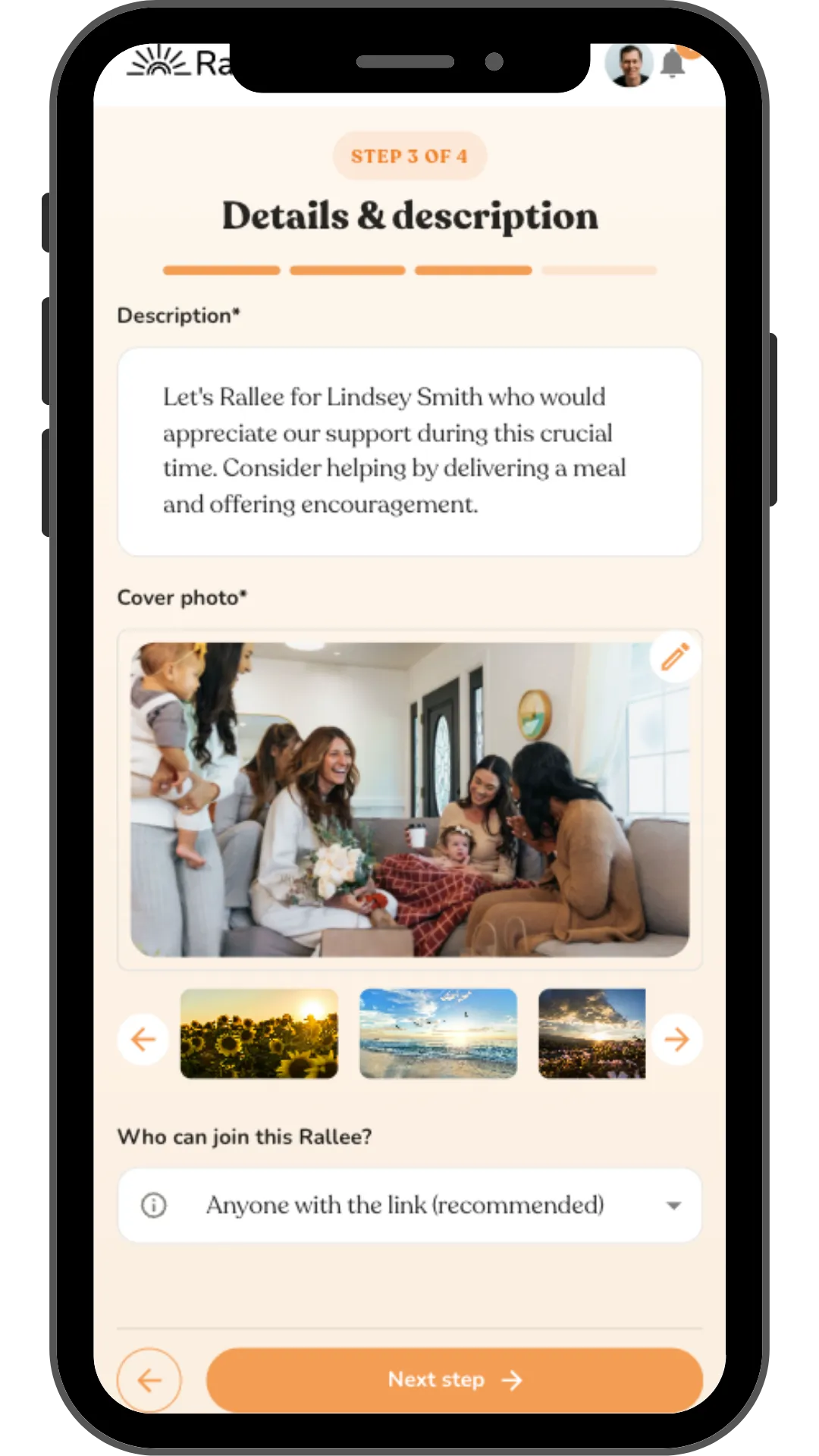 4
4Step 4
Write a description and add a cover photo.
A description template you can edit in seconds
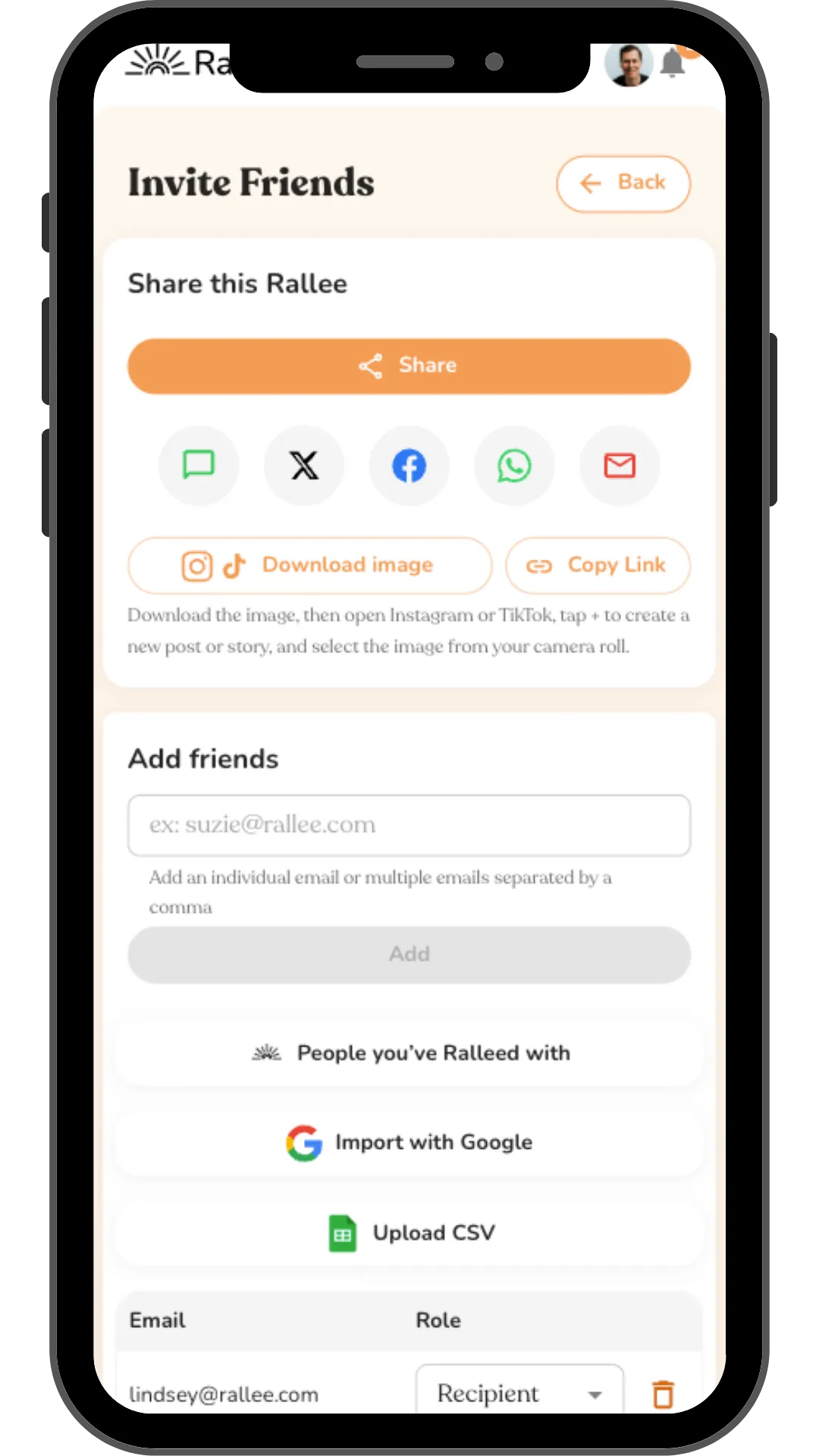 5
5Step 5
Invite friends and family to help.
Share the meal train via text, email, or on social media in one tap
- 6
Step 6
Watch the meal train fill up.
Guests claim a day and time with a single tap
Want the full walkthrough? Read our guide on how to start a meal train.
“It was so great to have a central place where I could update all my friends and family. It would have been exhausting doing this via text and calls.”
FAQ
Meal train for cancer patients: common questions
It depends on where they are in the cycle. In the first few days after a treatment, small deliveries on most days help, because cooking is usually off the table. The National Cancer Institute says nausea from chemo usually lasts 24 to 48 hours, though some people feel sick for up to 7 days. Later in the cycle, two or three meals a week is usually plenty, with freezer meals filling the gaps before the next round.3
Small, bland and cold usually works best. The National Cancer Institute suggests cold foods such as popsicles, pudding, yogurt and gelatin, bland starchy foods such as toast, rice, plain pasta and crackers, and says ginger ale and ginger tea may ease nausea. Taste changes are common, so ask what sounds good this week instead of assuming last month's favorite still works.3
As long as treatment does, and a little after. Chemotherapy is usually given in cycles over months, and the American Cancer Society says some people's fatigue lasts for weeks, months or even years after treatment ends. Offers of help tend to be strongest in the first few weeks, so plan fewer meals spread over a longer stretch.24
A gift card for food delivery, a grocery order, or a restaurant they already like. UT MD Anderson points out that you don't even have to cook: you can get takeout delivered, or order groceries online and have them delivered. Rides to treatment, childcare and errands help just as much as a meal.14
Only if you've been asked. Text when you arrive and leave the food at the door. Memorial Sloan Kettering's advice on visits is to give your friend permission to say no, and to be understanding if they cancel at the last minute.13
On Rallee it takes under 1 minute. Choose who the meal train is for, turn on meals and any other help you want such as rides or gift cards, add dietary needs, delivery times and the dates you need covered, then share the link. Friends pick the days they can bring a meal and get a reminder before their day. Rallee is free, with no ads.


Free, no ads
Start a meal train today.
Set it up in under 1 minute, share one link, and let friends pick the days they can help.
Start a free meal trainBy Kevin Holst, co-founder of Rallee. This page covers the logistics of feeding someone through cancer treatment. It is not medical or dietary advice. Every quote was checked against its source on 22 September 2026.
Sources (14)
American Cancer Society. Getting Chemotherapy Last revised 15 May 2025.
cancer.orgRetrieved 22 Sep 2026National Cancer Institute. Nausea and Vomiting and Cancer Treatment Updated 9 May 2025.
cancer.govRetrieved 22 Sep 2026American Cancer Society. Cancer-related Fatigue Last revised 16 Jul 2024.
cancer.orgRetrieved 22 Sep 2026American Cancer Society. Low White Blood Cell Counts (Neutropenia) Last revised 4 Dec 2025.
cancer.orgRetrieved 22 Sep 2026American Cancer Society. Taste and Smell Changes Last revised 26 Jun 2024.
cancer.orgRetrieved 22 Sep 2026National Cancer Institute. Mouth and Throat Problems and Cancer Treatment Reviewed 24 Sep 2021.
cancer.govRetrieved 22 Sep 2026National Cancer Institute. Weight Changes and Cancer Updated 15 Oct 2024.
cancer.govRetrieved 22 Sep 2026National Cancer Institute. Diarrhea and Cancer Treatment Updated 16 May 2025.
cancer.govRetrieved 22 Sep 2026National Cancer Institute. Constipation and Cancer Treatment Updated 16 May 2025.
cancer.govRetrieved 22 Sep 2026American Cancer Society. Food Safety During Cancer Treatment Last revised 21 Nov 2025.
cancer.orgRetrieved 22 Sep 2026American Cancer Society. How to Be a Friend to Someone With Cancer Last revised 17 Jul 2026.
cancer.orgRetrieved 22 Sep 2026Memorial Sloan Kettering Cancer Center. 10 Tips for Supporting a Friend With Cancer 13 Oct 2014.
mskcc.orgRetrieved 22 Sep 2026UT MD Anderson Cancer Center. Ways to help someone during cancer treatment 29 Feb 2024.
mdanderson.orgRetrieved 22 Sep 2026
We use cookies and local storage to enhance your experience, analyze site usage, and remember your preferences.
By clicking "Accept", you consent to our use of cookies and storage. Learn more